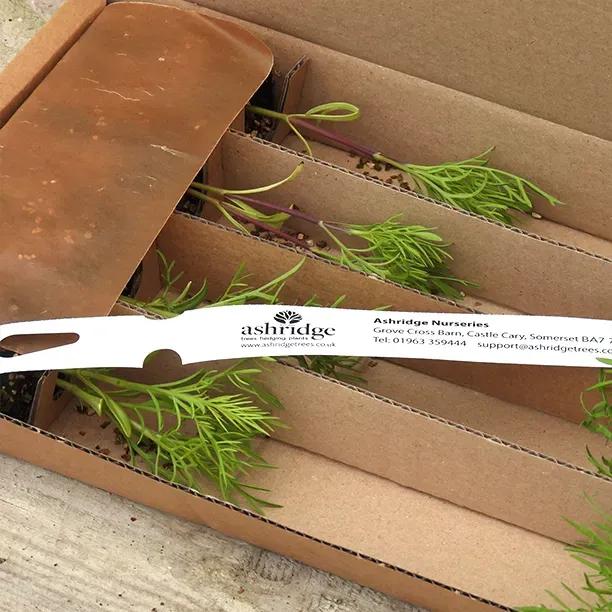
Sonata Carmine Cosmos Plants
- Variety: Cosmos bipinnatus 'Sonata Carmine'
- Common name: Cosmos / Cosmea / Mexican Aster
- Type: Half-hardy annual
- Flower form: Single
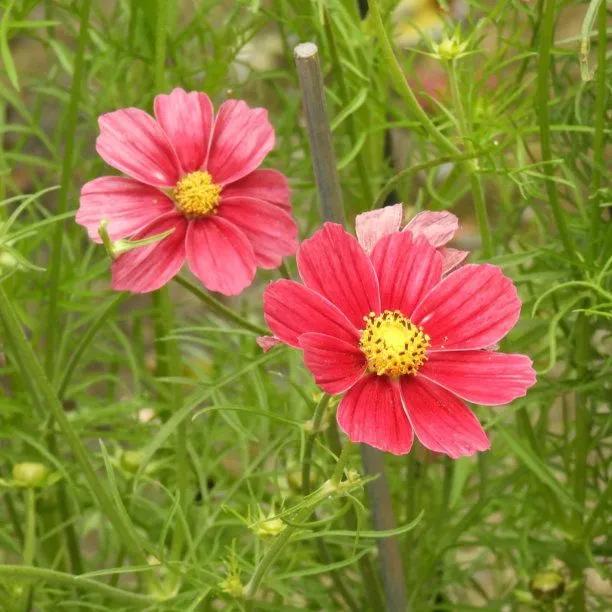
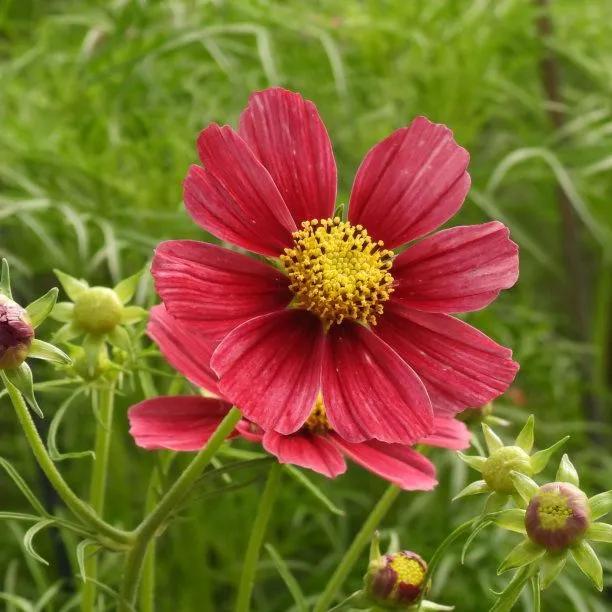
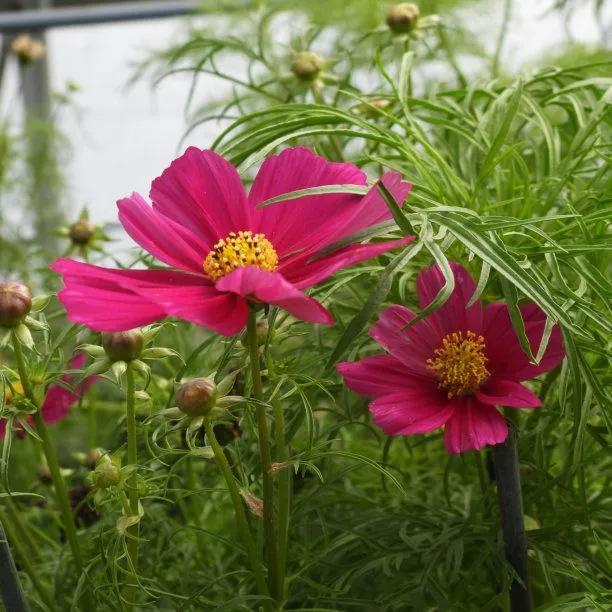
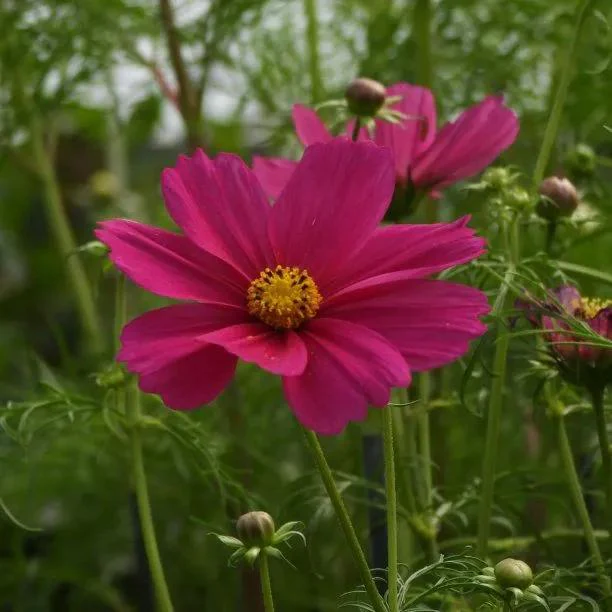
- Colour: Brilliant carmine with golden stamens
- Height: 50–60 cm (20–24 in)
- Flowering period: June–October
- Position: Full sun (minimum 6 hours)
- Soil: Well-drained, ordinary to poor fertility
- Spacing: 25 cm (10 in)
- Good for cutting: Yes
- Container suitable: Yes
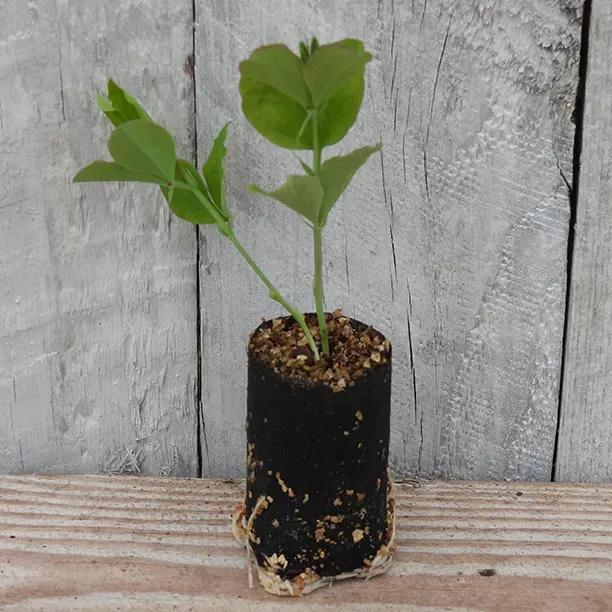
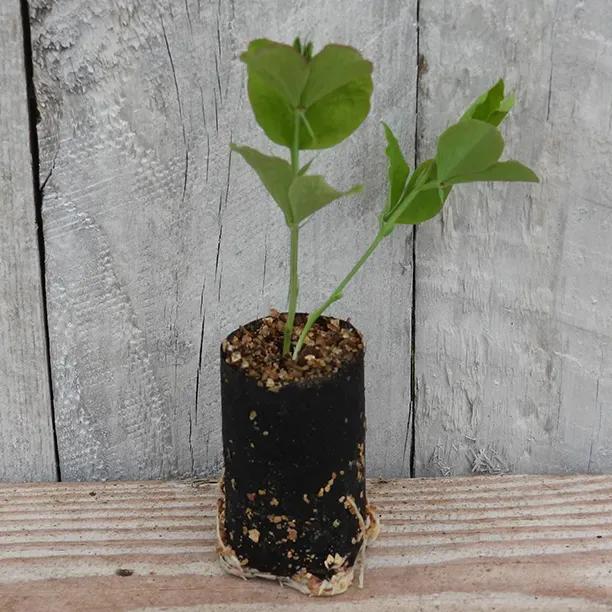
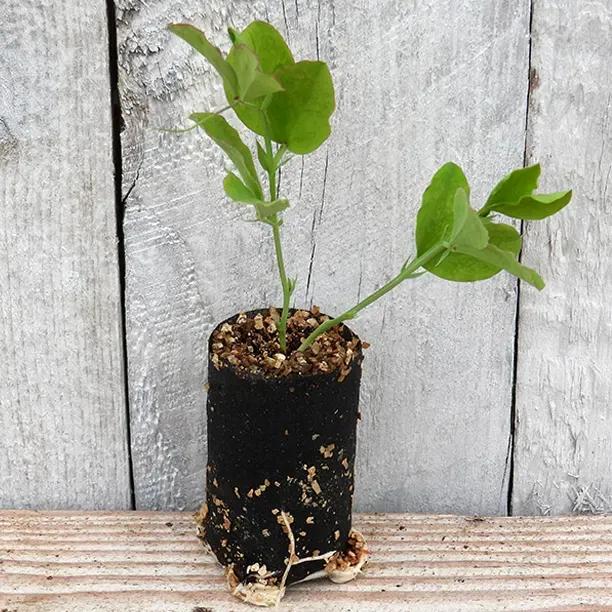
- Sold as: Jumbo plug seedlings, hand-sown by us
- Plant outdoors: After last frost (mid-May in most areas)
- Delivered: Late April to May by next-day courier. Collection from Castle Cary also available
Sonata Carmine – The Best Dark Cosmos for Small Spaces
Sonata Carmine is the deepest colour in the Sonata series and probably the best dark pink cosmos for a patio, balcony, or window box. At 50–60 cm it is compact and tidy, roughly half the height of a standard cosmos, and it does not need staking. Carmine is a good name for it. The colour is a rich, deep pink just on the border of red, with gold stamens at the centre of each bloom that give it warmth and life. It flowers from June until the frosts and, once it gets going, does not seem to slow down.
Cosmos look better planted in numbers than in ones and twos, and the Sonatas are no exception. A dozen plants of Sonata Carmine in a single drift, or mixed with Sonata White and Sonata Pink, gives you a dense, floriferous display that keeps going all summer with almost no maintenance beyond deadheading and watering. We have not tested it scientifically, but the Sonatas seem to produce as many flowers as the tall varieties despite being half the size. The flower stems are shorter, which means smaller vases and posies rather than big jugs, but the sheer quantity is remarkable. In a window box or trough, three or four plants will fill the space by midsummer.
Colour Companions for Cosmos Sonata Carmine
The Sonata series was bred to be planted together, and the three colours, carmine, pink, and white, work as a ready-made scheme. But Sonata Carmine also holds its own outside the series. Xanthos (soft lemon-yellow, same compact height) provides a colour contrast that is simple and effective, the kind of pairing that looks like you planned it even if you did not.
In a container, try Sonata Carmine with bronze-leaved heucheras like Caramel or Palace Purple at the base. The dark foliage picks up the carmine tones and gives the pot substance at ground level. Both are happy in sun and well-drained compost, and a single pot of the two on a sunny step is one of the simplest summer schemes you can put together.
The Ashridge Difference
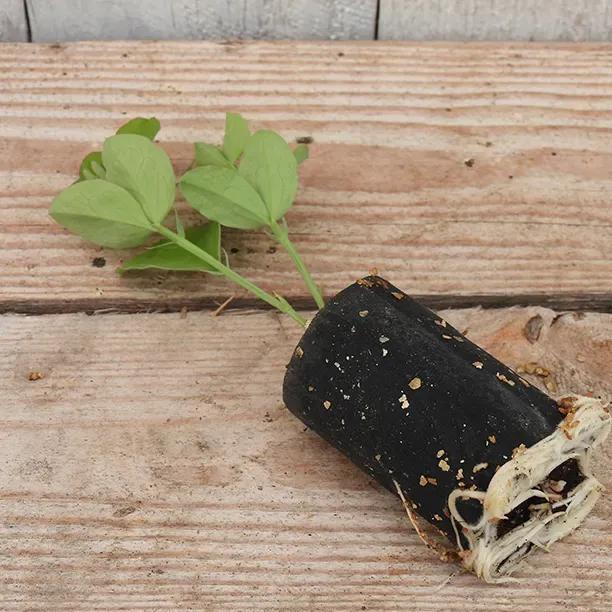
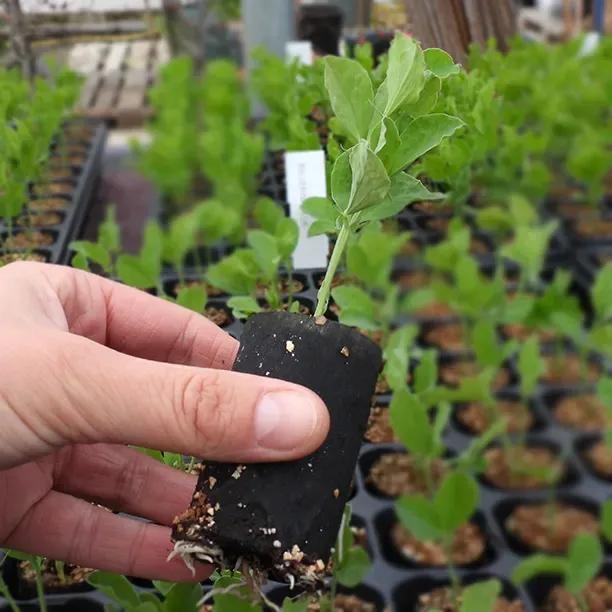
Every cosmos plug we sell is hand-sown and grown at our Somerset nursery. We source fresh seed each year because cosmos does not come true from saved seed. No contract growing, no outside suppliers. Your plants are hardened off before dispatch and arrive as sturdy jumbo plugs ready for planting.
Next-day courier from late April. Our plant guarantee covers anything that arrives damaged or fails to establish, and when you ring us you speak to the people who grew your plants.
Frequently Asked Questions
How tall does Cosmos Sonata Carmine grow?
Sonata Carmine reaches 50–60 cm (20–24 in), roughly half the height of standard cosmos like the Sensation series. It needs no staking and is well suited to exposed sites, windy balconies, and the front of borders. Space plants 25 cm apart. For full growing advice, see our cosmos growing guide.
Can I grow Cosmos Sonata Carmine in a pot?
Yes, the Sonata series are among the best cosmos for containers. Sonata Carmine stays compact and upright in a pot of 5 litres or larger with no support needed. Feed fortnightly with half-strength tomato fertiliser once buds appear. For full container advice including compost mix and watering, see our guide to growing cosmos in pots.
What looks good planted with Cosmos Sonata Carmine?
Within the Sonata series, mix it with Sonata White and Sonata Pink for a complete colour range at the same height. For contrast with a different variety, Xanthos (pale yellow, same compact size) is a winner. In containers, underplant with bronze heucheras for foliage depth. Browse the full range in our cosmos collection.
Are cosmos petals edible?
Yes. The petals of Cosmos bipinnatus are edible and are used as a garnish in some restaurant kitchens. They have a mild, slightly peppery flavour with herbal notes sometimes compared to nasturtiums. We would not recommend eating petals from plants that have been treated with pesticides, but cosmos grown without sprays are fine to scatter over a salad or a cake. It is not a reason to grow them, but it is a nice thing to know.
How do I deadhead cosmos?
Cut the stem back to just above the next leaf joint or side branch, not just the flower head. This encourages branching from lower down and produces more flowering shoots. Deadhead every few days during peak flowering in August. If you stop, the plant sets seed and the display stops weeks earlier than it needs to. The spent heads look similar to new buds, so check: buds are round and firm, spent heads are elongated and soft.
Product Information
Product Information
Shipping & Returns
Shipping & Returns
Description
- Variety: Cosmos bipinnatus 'Sonata Carmine'
- Common name: Cosmos / Cosmea / Mexican Aster
- Type: Half-hardy annual
- Flower form: Single
- Colour: Brilliant carmine with golden stamens
- Height: 50–60 cm (20–24 in)
- Flowering period: June–October
- Position: Full sun (minimum 6 hours)
- Soil: Well-drained, ordinary to poor fertility
- Spacing: 25 cm (10 in)
- Good for cutting: Yes
- Container suitable: Yes
- Sold as: Jumbo plug seedlings, hand-sown by us
- Plant outdoors: After last frost (mid-May in most areas)
- Delivered: Late April to May by next-day courier. Collection from Castle Cary also available
Sonata Carmine – The Best Dark Cosmos for Small Spaces
Sonata Carmine is the deepest colour in the Sonata series and probably the best dark pink cosmos for a patio, balcony, or window box. At 50–60 cm it is compact and tidy, roughly half the height of a standard cosmos, and it does not need staking. Carmine is a good name for it. The colour is a rich, deep pink just on the border of red, with gold stamens at the centre of each bloom that give it warmth and life. It flowers from June until the frosts and, once it gets going, does not seem to slow down.
Cosmos look better planted in numbers than in ones and twos, and the Sonatas are no exception. A dozen plants of Sonata Carmine in a single drift, or mixed with Sonata White and Sonata Pink, gives you a dense, floriferous display that keeps going all summer with almost no maintenance beyond deadheading and watering. We have not tested it scientifically, but the Sonatas seem to produce as many flowers as the tall varieties despite being half the size. The flower stems are shorter, which means smaller vases and posies rather than big jugs, but the sheer quantity is remarkable. In a window box or trough, three or four plants will fill the space by midsummer.
Colour Companions for Cosmos Sonata Carmine
The Sonata series was bred to be planted together, and the three colours, carmine, pink, and white, work as a ready-made scheme. But Sonata Carmine also holds its own outside the series. Xanthos (soft lemon-yellow, same compact height) provides a colour contrast that is simple and effective, the kind of pairing that looks like you planned it even if you did not.
In a container, try Sonata Carmine with bronze-leaved heucheras like Caramel or Palace Purple at the base. The dark foliage picks up the carmine tones and gives the pot substance at ground level. Both are happy in sun and well-drained compost, and a single pot of the two on a sunny step is one of the simplest summer schemes you can put together.
The Ashridge Difference
Every cosmos plug we sell is hand-sown and grown at our Somerset nursery. We source fresh seed each year because cosmos does not come true from saved seed. No contract growing, no outside suppliers. Your plants are hardened off before dispatch and arrive as sturdy jumbo plugs ready for planting.
Next-day courier from late April. Our plant guarantee covers anything that arrives damaged or fails to establish, and when you ring us you speak to the people who grew your plants.
Frequently Asked Questions
How tall does Cosmos Sonata Carmine grow?
Sonata Carmine reaches 50–60 cm (20–24 in), roughly half the height of standard cosmos like the Sensation series. It needs no staking and is well suited to exposed sites, windy balconies, and the front of borders. Space plants 25 cm apart. For full growing advice, see our cosmos growing guide.
Can I grow Cosmos Sonata Carmine in a pot?
Yes, the Sonata series are among the best cosmos for containers. Sonata Carmine stays compact and upright in a pot of 5 litres or larger with no support needed. Feed fortnightly with half-strength tomato fertiliser once buds appear. For full container advice including compost mix and watering, see our guide to growing cosmos in pots.
What looks good planted with Cosmos Sonata Carmine?
Within the Sonata series, mix it with Sonata White and Sonata Pink for a complete colour range at the same height. For contrast with a different variety, Xanthos (pale yellow, same compact size) is a winner. In containers, underplant with bronze heucheras for foliage depth. Browse the full range in our cosmos collection.
Are cosmos petals edible?
Yes. The petals of Cosmos bipinnatus are edible and are used as a garnish in some restaurant kitchens. They have a mild, slightly peppery flavour with herbal notes sometimes compared to nasturtiums. We would not recommend eating petals from plants that have been treated with pesticides, but cosmos grown without sprays are fine to scatter over a salad or a cake. It is not a reason to grow them, but it is a nice thing to know.
How do I deadhead cosmos?
Cut the stem back to just above the next leaf joint or side branch, not just the flower head. This encourages branching from lower down and produces more flowering shoots. Deadhead every few days during peak flowering in August. If you stop, the plant sets seed and the display stops weeks earlier than it needs to. The spent heads look similar to new buds, so check: buds are round and firm, spent heads are elongated and soft.