Snow Queen Birch Trees
Snow Queen Birch Trees
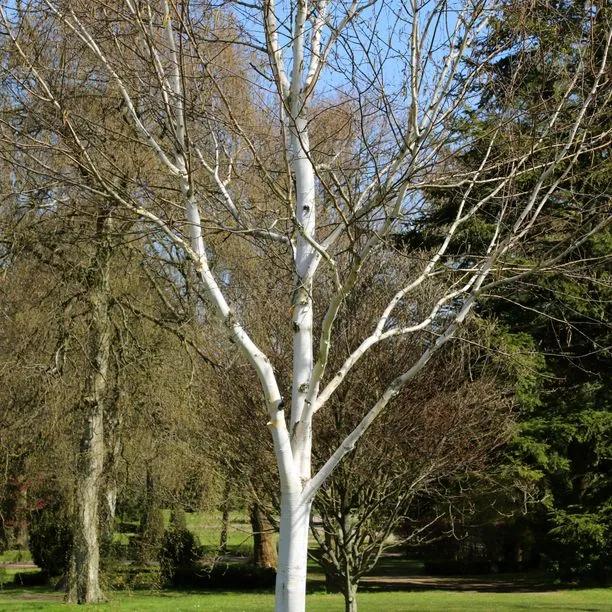
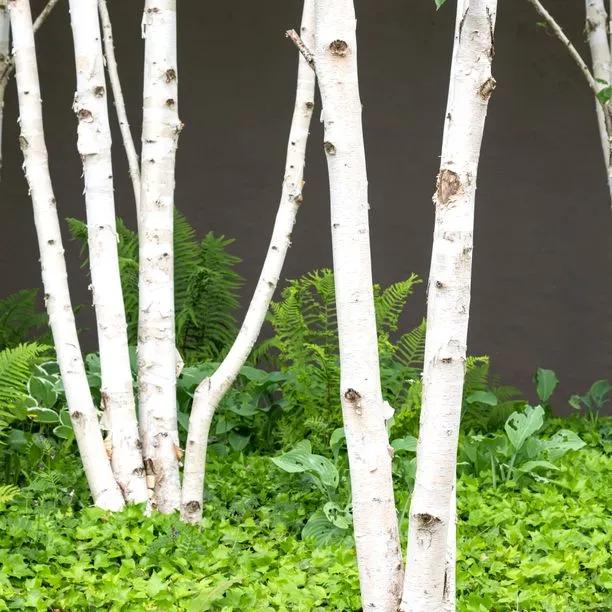
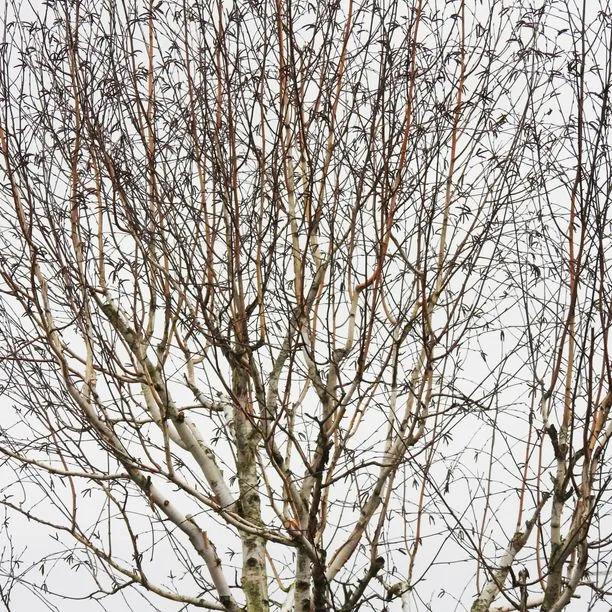
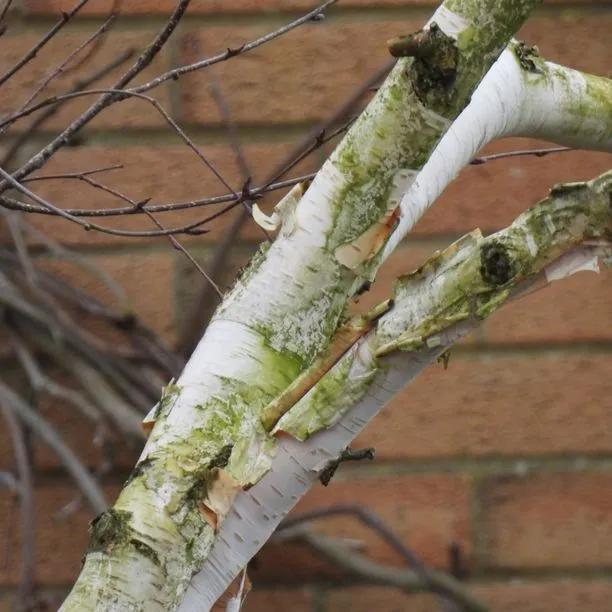
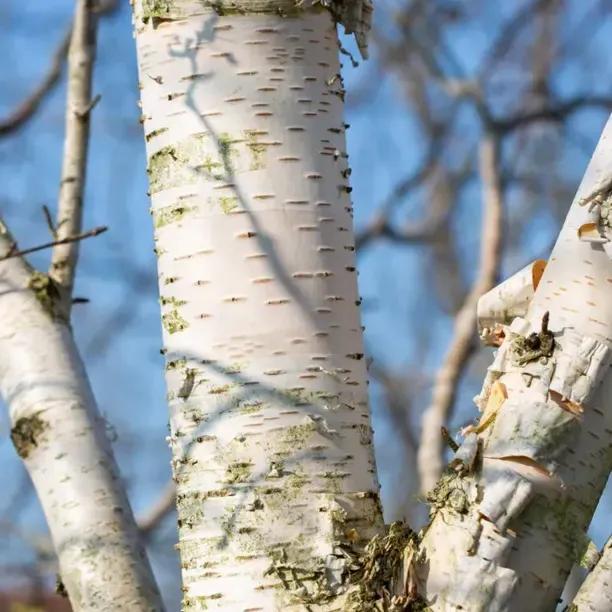
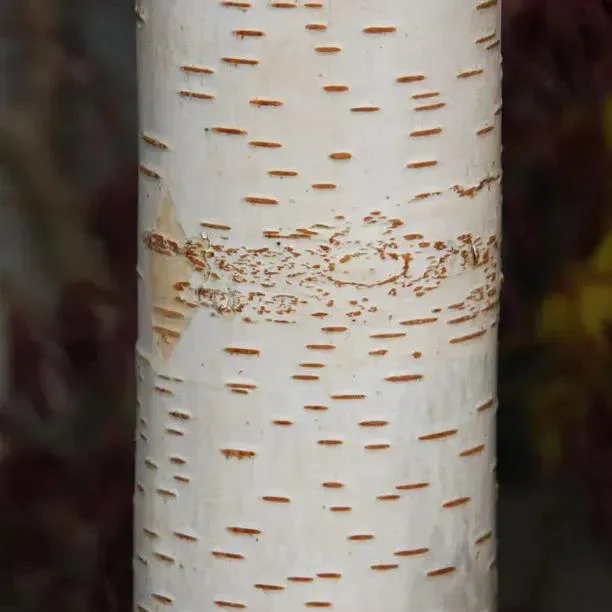
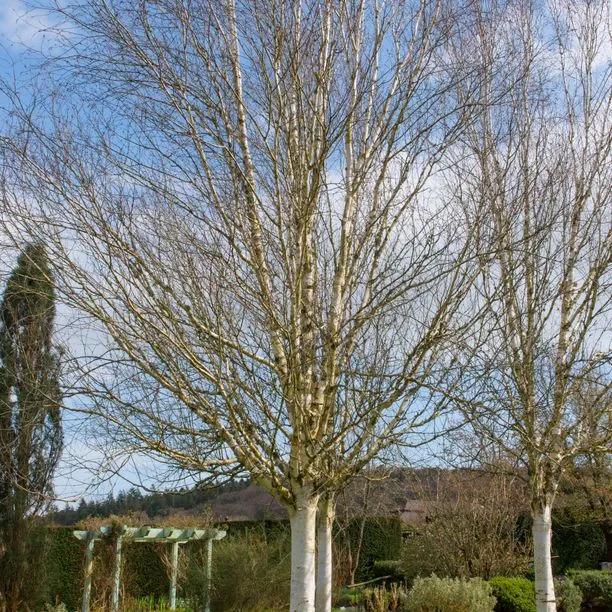
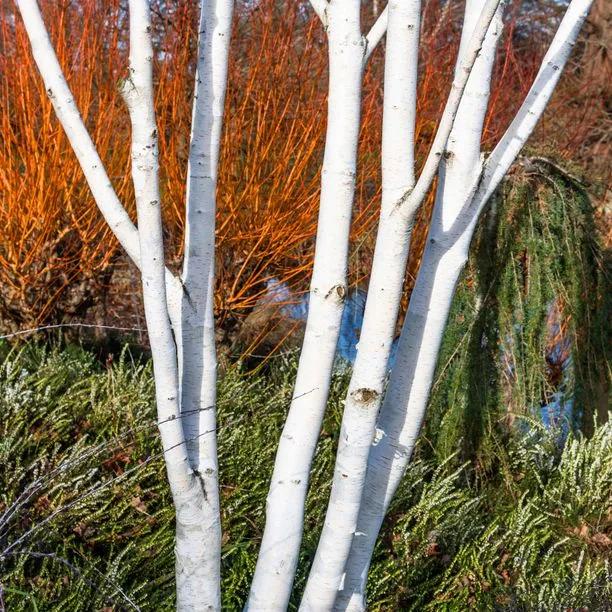
'Snow Queen Birch' betula utilis jacquemontii Snow Queen, or Doorenbos, is a royal presence in the garden. The sublime pure-white bark is a fabulous feature all year round, particularly in the colder months, when the structural 'bones' of a garden are revealed and the tree is lit by the low winter sun. Snow Queen develops her white bark earlier than regular Himalayan Birches.
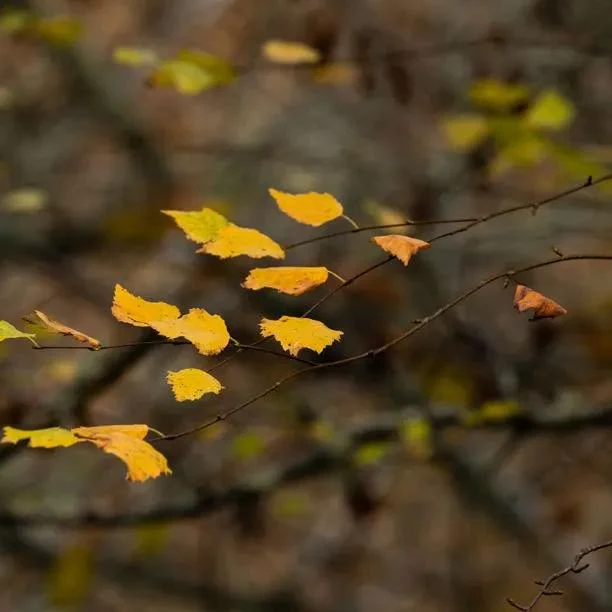
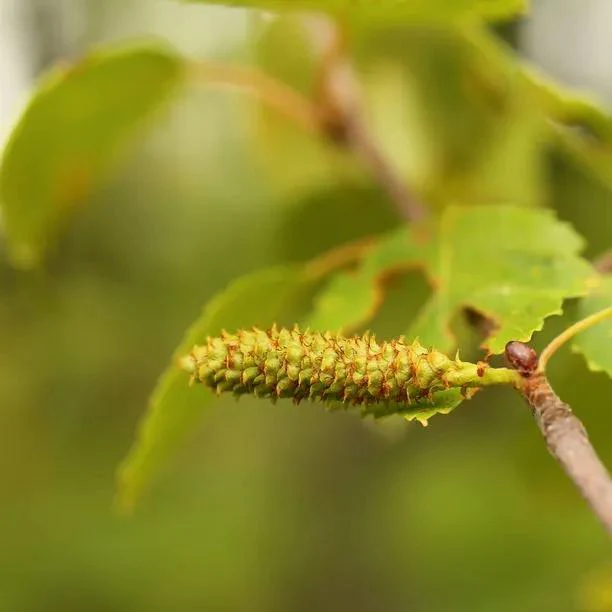
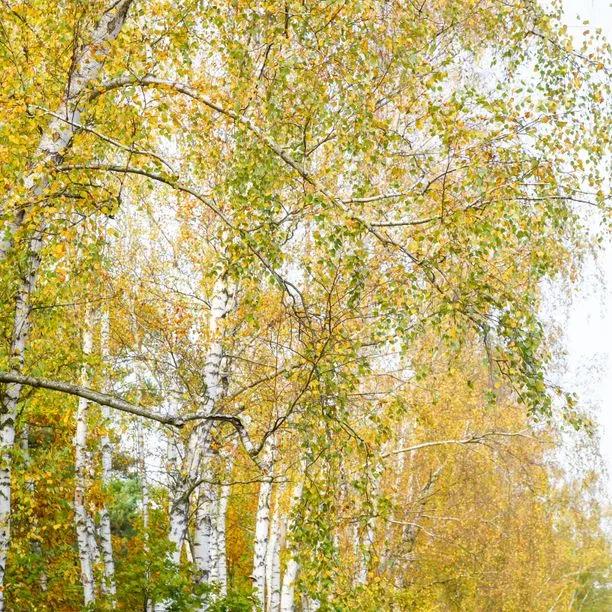
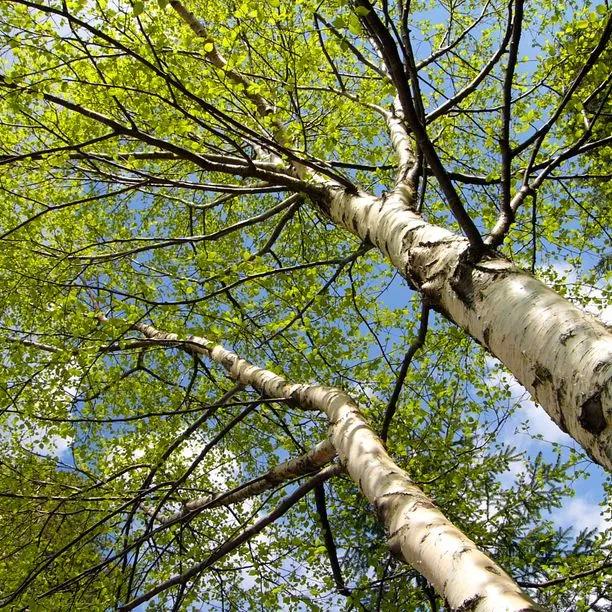
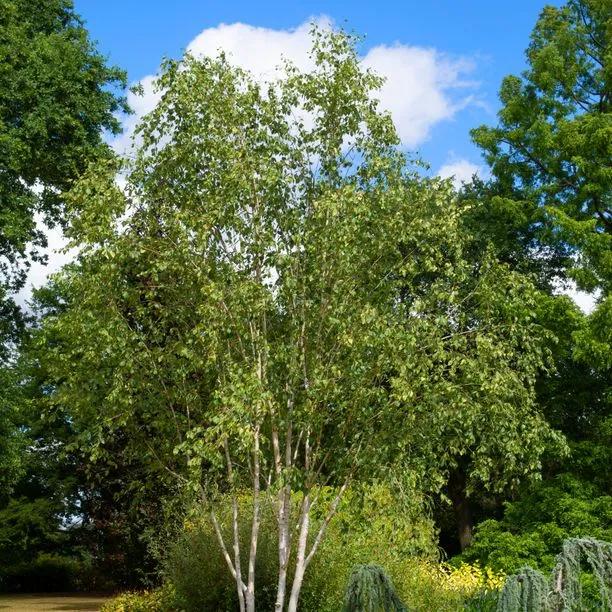
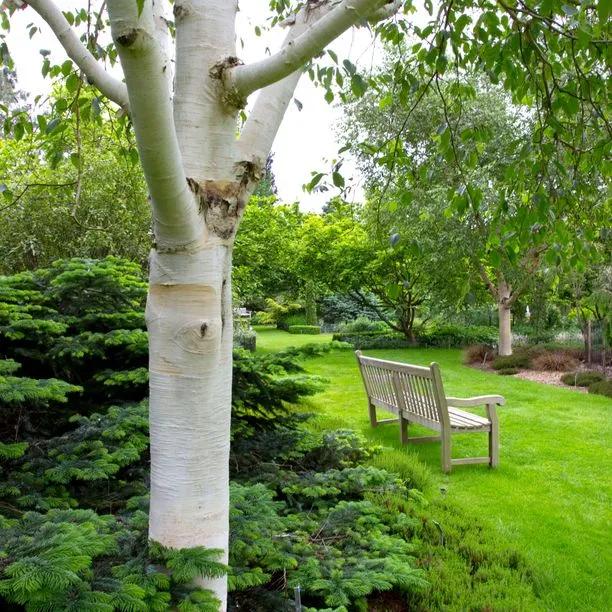
Spring brings those pretty little catkins, shivering in the March breeze like lambs' tails, and in Autumn the leaves turn soft mango-yellow before falling to reveal a handsome pyramid-shaped skeleton, the upper limbs swaying with the wind. It's a lovely specimen tree, used as a focal point, or planted in small groups to create a coppice of luminous white bark. Reaching about 7 metres with an upright habit, an avenue of them can provide light screening.
Browse the rest of our range of birch trees.
Delivery season: Birches are delivered bareroot during late autumn and winter, approximately November-March inclusive.
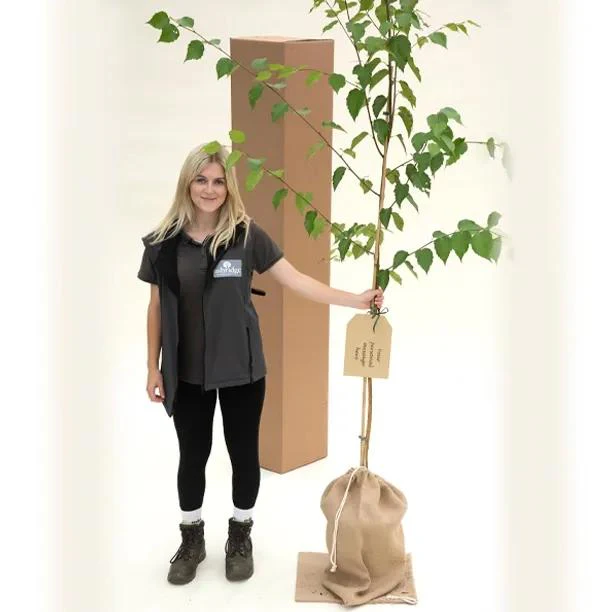
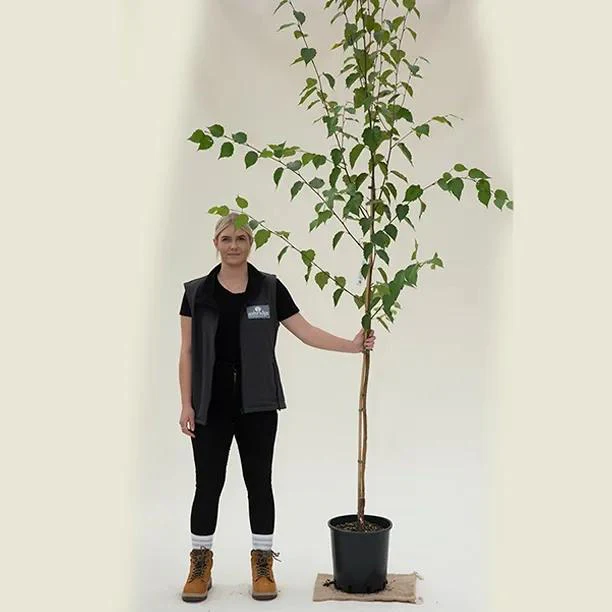
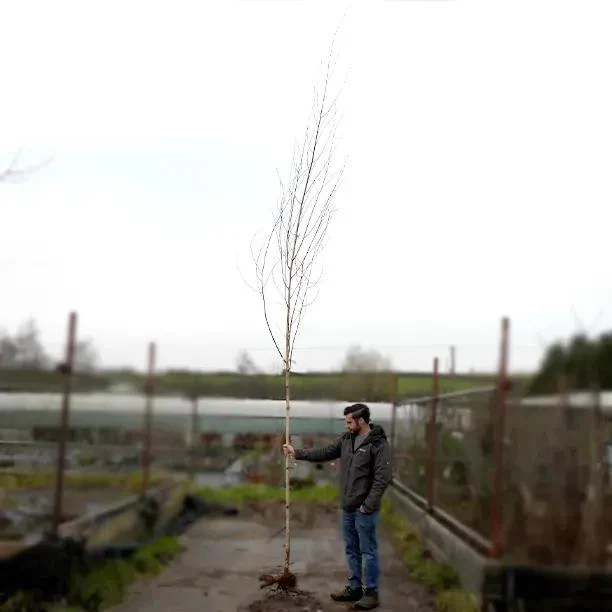
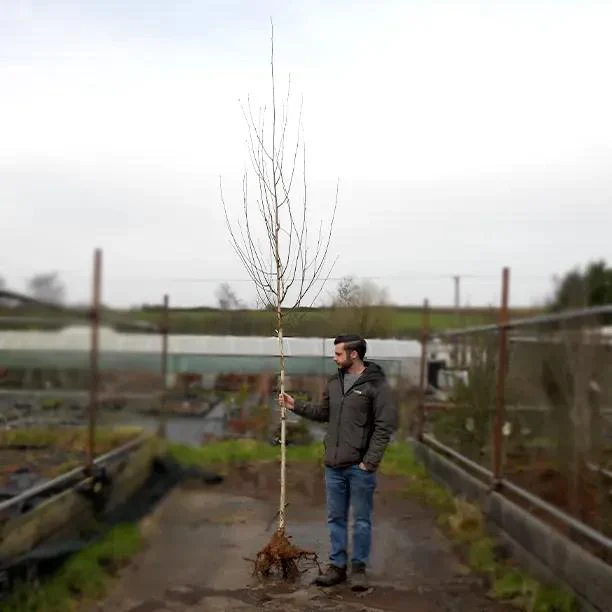
Choosing a size: Small trees are cheaper, easier to handle and more forgiving of less than ideal aftercare, so they're best for a big planting project. If instant impact is your priority, or if you are only buying a few plants for use in a place where it's convenient to water them well in their first year, then you may as well use bigger ones. All our bareroot trees are measured by their height in centimetres above the ground (the roots aren't measured).
Features
- Final height/spread: 7 x 3.5m in 20 years
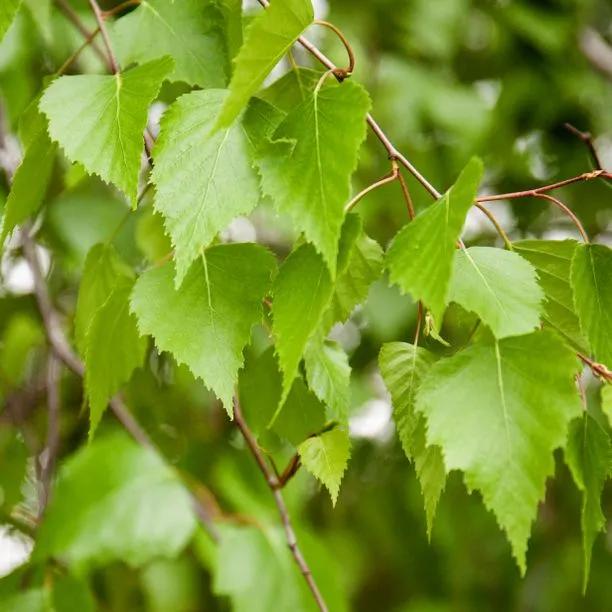
- Foliage: deciduous, green, forming a light canopy
- Soil: well drained
- Use: avenue, specimen, woodland, particularly in small gardens
- White peeling bark, spring catkins, orange autumn leaf colour
- RHS Award of Garden Merit
Growing Snow Queen Birch
Suitable for pretty much any soil except chalk, it looks best in full sun (especially in winter) but will tolerate light shade.
She is small enough to fit in most borders as a specimen, and is a classic partner for white-flowered perennials. For a stunning winter tableau, white hardy geraniums work well, as do hellebores and snowdrops.
History & Trivia
Simon Doorenbos (1891-1980) was Director of The Hague Parks Department between 1927 and 1957, and a founder of the International Dendrology Society. He also worked extensively with Dahlias, and bred a hybrid Elm, Den Haag, the first recorded attempt at a variety resistant to Dutch Elm disease, which had been discovered in Holland in 1921. The Liset crab apple is one of his many creations.
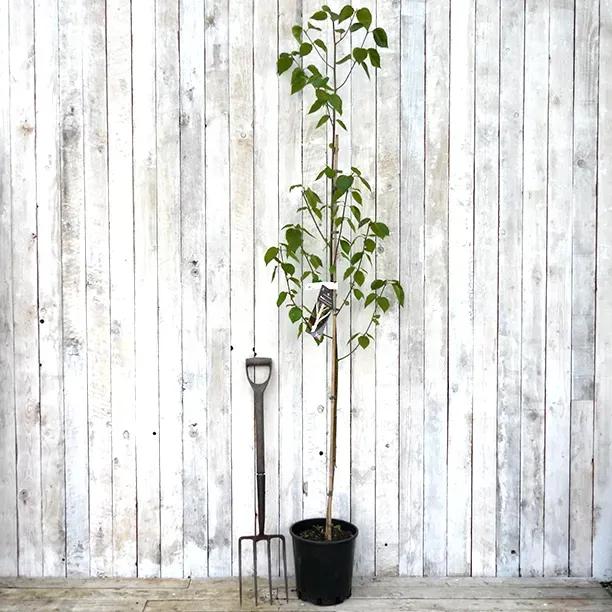
Standard trees are measured by their girth in centimetres 1 metre above ground level: their trunk's waist measurement. Unlike sapling trees and hedge plants, standards aren't measured by their height, which will vary quite a bit both between and within species.
So, a 6/8cm standard tree has a trunk with a circumference of 6-8cm and an 8/10 standard has a trunk 8-10cm around. This measurement makes no difference to the tree's final height.
On average, standard trees are 2-3.5 metres tall when they arrive, but we cannot tell you precisely how tall your trees will be before we deliver them.
Original: $99.28
-70%$99.28
$29.78Product Information
Product Information
Shipping & Returns
Shipping & Returns
Description
Snow Queen Birch Trees
'Snow Queen Birch' betula utilis jacquemontii Snow Queen, or Doorenbos, is a royal presence in the garden. The sublime pure-white bark is a fabulous feature all year round, particularly in the colder months, when the structural 'bones' of a garden are revealed and the tree is lit by the low winter sun. Snow Queen develops her white bark earlier than regular Himalayan Birches.
Spring brings those pretty little catkins, shivering in the March breeze like lambs' tails, and in Autumn the leaves turn soft mango-yellow before falling to reveal a handsome pyramid-shaped skeleton, the upper limbs swaying with the wind. It's a lovely specimen tree, used as a focal point, or planted in small groups to create a coppice of luminous white bark. Reaching about 7 metres with an upright habit, an avenue of them can provide light screening.
Browse the rest of our range of birch trees.
Delivery season: Birches are delivered bareroot during late autumn and winter, approximately November-March inclusive.
Choosing a size: Small trees are cheaper, easier to handle and more forgiving of less than ideal aftercare, so they're best for a big planting project. If instant impact is your priority, or if you are only buying a few plants for use in a place where it's convenient to water them well in their first year, then you may as well use bigger ones. All our bareroot trees are measured by their height in centimetres above the ground (the roots aren't measured).
Features
- Final height/spread: 7 x 3.5m in 20 years
- Foliage: deciduous, green, forming a light canopy
- Soil: well drained
- Use: avenue, specimen, woodland, particularly in small gardens
- White peeling bark, spring catkins, orange autumn leaf colour
- RHS Award of Garden Merit
Growing Snow Queen Birch
Suitable for pretty much any soil except chalk, it looks best in full sun (especially in winter) but will tolerate light shade.
She is small enough to fit in most borders as a specimen, and is a classic partner for white-flowered perennials. For a stunning winter tableau, white hardy geraniums work well, as do hellebores and snowdrops.
History & Trivia
Simon Doorenbos (1891-1980) was Director of The Hague Parks Department between 1927 and 1957, and a founder of the International Dendrology Society. He also worked extensively with Dahlias, and bred a hybrid Elm, Den Haag, the first recorded attempt at a variety resistant to Dutch Elm disease, which had been discovered in Holland in 1921. The Liset crab apple is one of his many creations.
Standard trees are measured by their girth in centimetres 1 metre above ground level: their trunk's waist measurement. Unlike sapling trees and hedge plants, standards aren't measured by their height, which will vary quite a bit both between and within species.
So, a 6/8cm standard tree has a trunk with a circumference of 6-8cm and an 8/10 standard has a trunk 8-10cm around. This measurement makes no difference to the tree's final height.
On average, standard trees are 2-3.5 metres tall when they arrive, but we cannot tell you precisely how tall your trees will be before we deliver them.